© 2023 ANOLAB. All rights reserved
HOME | ABOUT US | HERITAGE | MUSEUMS | VISUAL HISTORIES | CONTACT US


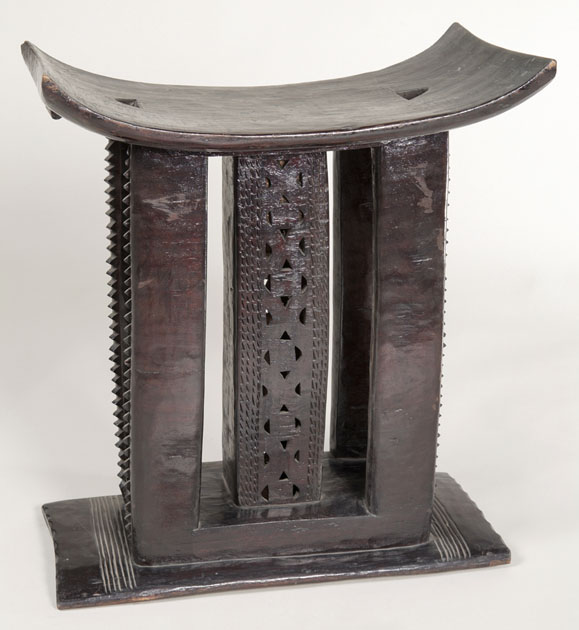
Asante/Fante stool, carved from one piece of wood and covered with black varnish, rectangular base with central support and 4 legs with curved rectangular seat, has triangles cut out of legs and decorated central support.
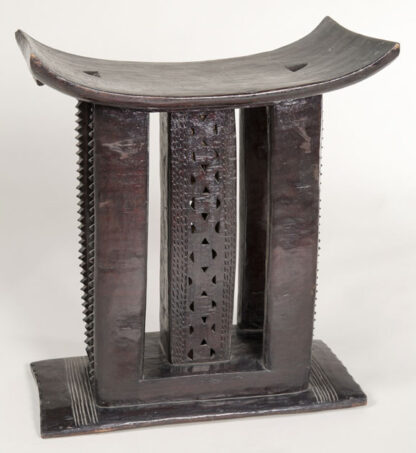
Asante/Fante stool, carved from one piece of wood and covered with black varnish, rectangular base with central support and 4 legs with curved rectangular seat, has triangles cut out of legs and decorated central support.
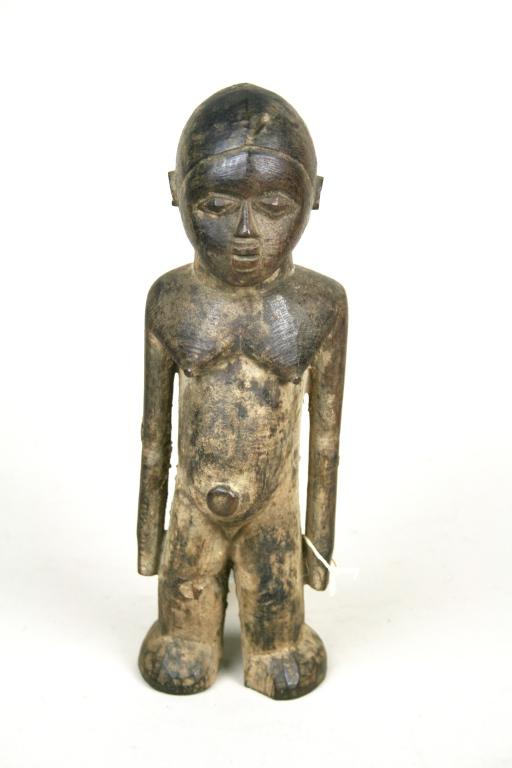
This is an example of a Lobi shrine sculpture whose bold and stylized form evidently appealed to Hutchings, who found it “vigorous” and “interesting”. It is a female wooden figure carved by a local craftsman, measuring at 236 mm high, 76 mm wide and 71 mm in depth. The craftsman would often be approached to produce a Bateba for a specific purpose.
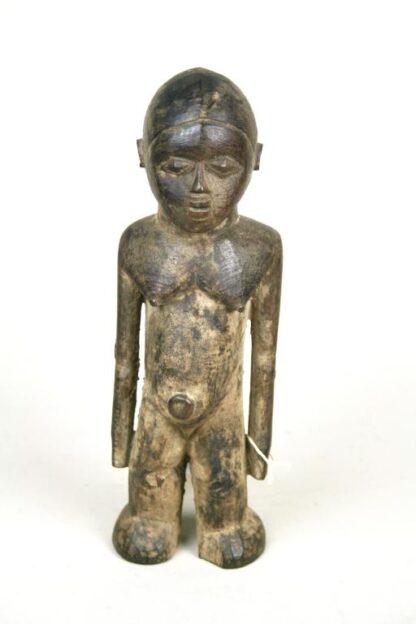
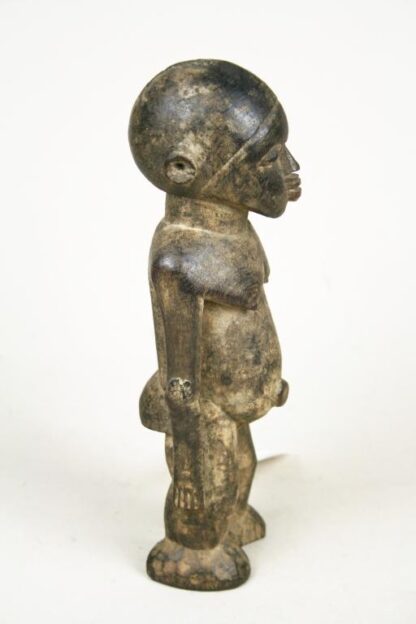
This is an example of a Lobi shrine sculpture whose bold and stylized form evidently appealed to Hutchings, who found it “vigorous” and “interesting”. It is a female wooden figure carved by a local craftsman, measuring at 236 mm high, 76 mm wide and 71 mm in depth. The craftsman would often be approached to produce a Bateba for a specific purpose.
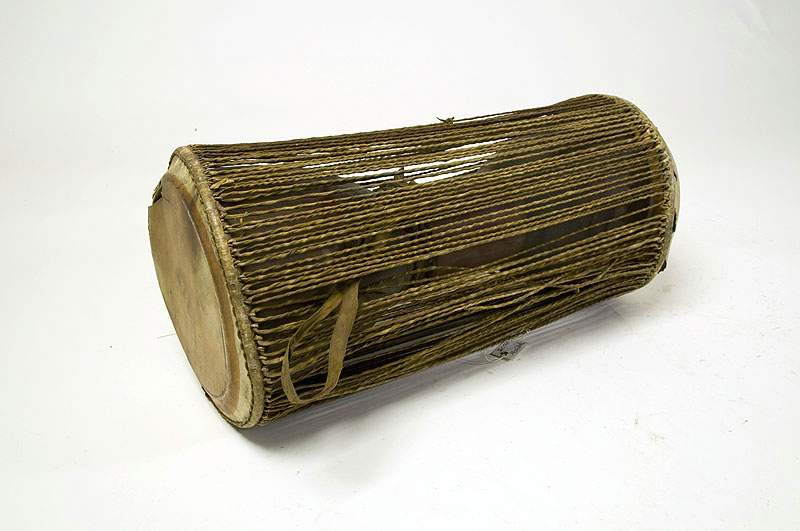
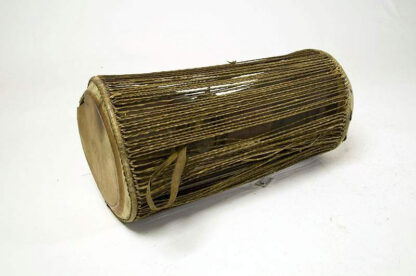
This donno is an hourglass shaped wooden pressure drum with two leather surfaces. It has a height of forty four centimeters and a diameter of seventeen centimeters. It orginates from the people of Dagbon who are called Dagomba.
This donno is an hourglass shaped wooden pressure drum with two leather surfaces. It has a height of forty four centimeters and a diameter of seventeen centimeters. It orginates from the people of Dagbon who are called Dagomba.

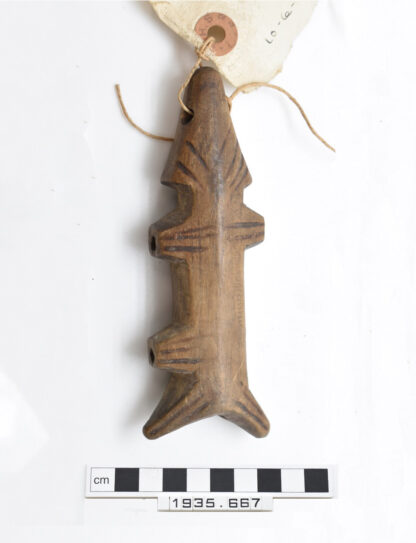
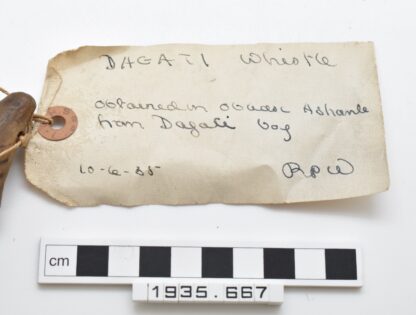
Wooden whistle of soft whitewood in the shape of a fish. Burned details.
Wooden whistle of soft whitewood in the shape of a fish. Burned details.
Coiled basketry dance/ war helmet with pair of cow horns attached to crown. Worn by young Konkombo men when they dance at weddings and funerals of senior men and women in their community.
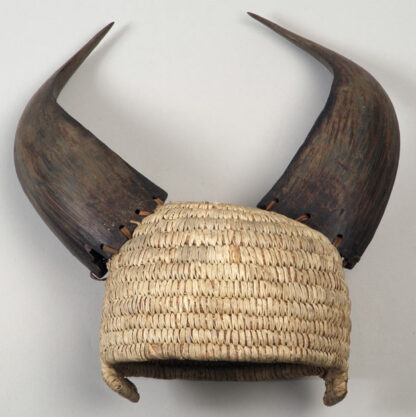
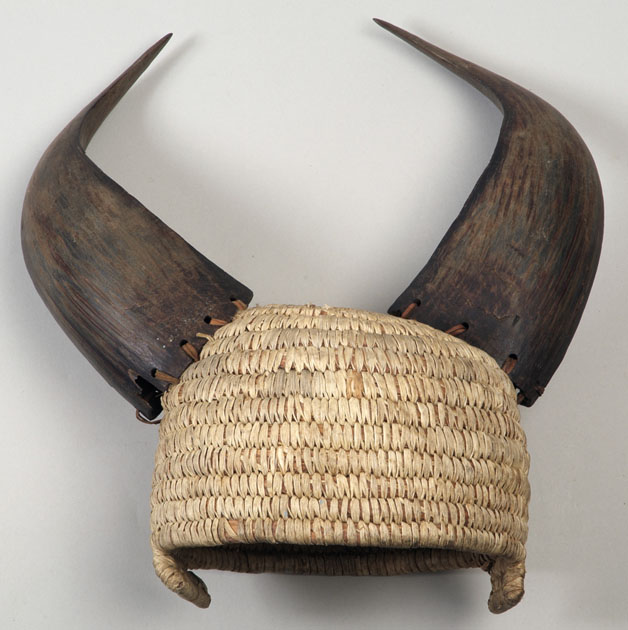
Coiled basketry dance/ war helmet with pair of cow horns attached to crown. Worn by young Konkombo men when they dance at weddings and funerals of senior men and women in their community.

This is a ceramic container called the KukwƐi of the Ga people, they are an ethnic group located in Ghana, Togo and Benin. It is an oval black earthenware footed tureen-like dish, with incised line and pierced hole decoration. Whilst the lid has a looped handle, it is a native soup tureen. Made in an Accra village called Korlibu one mile from Accra, Gold Coast.
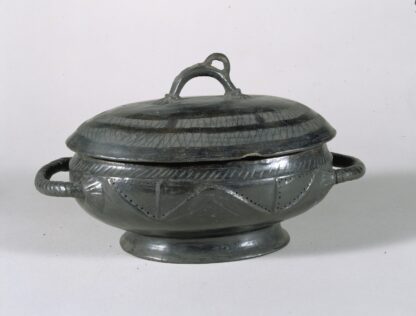
This is a ceramic container called the KukwƐi of the Ga people, they are an ethnic group located in Ghana, Togo and Benin. It is an oval black earthenware footed tureen-like dish, with incised line and pierced hole decoration. Whilst the lid has a looped handle, it is a native soup tureen. Made in an Accra village called Korlibu one mile from Accra, Gold Coast.

Red clay pipe bowl shaped like a male head with flared and flat base. Eyebrows, moustache and hair painted in black, eyes painted with white and black; one diagonal grooves over each cheek and vertical groove on forehead, all painted black; entire face incised with lines, likely indicating scarification; four indented or stamped lines from ear to neck on both sides.
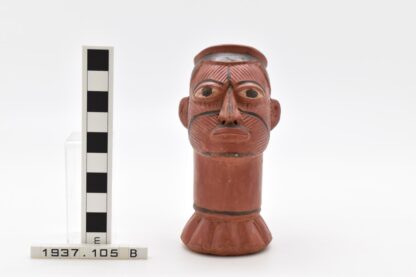
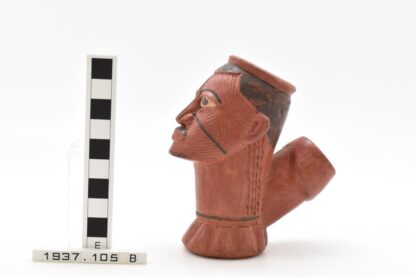
Red clay pipe bowl shaped like a male head with flared and flat base. Eyebrows, moustache and hair painted in black, eyes painted with white and black; one diagonal grooves over each cheek and vertical groove on forehead, all painted black; entire face incised with lines, likely indicating scarification; four indented or stamped lines from ear to neck on both sides.
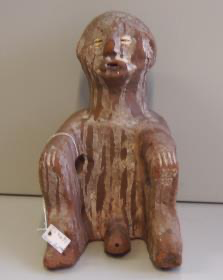
This is the protection charm figure of the Ewe people. The figure would lay within a shrine amongst an array of additional figures and complimentary instruments. As such, the shrine is an enclosure or room that has been made to house artefacts that are used for religious activities.
This is the protection charm figure of the Ewe people. The figure would lay within a shrine amongst an array of additional figures and complimentary instruments. As such, the shrine is an enclosure or room that has been made to house artefacts that are used for religious activities.




This theme is awesome and the designer is very helpful. I had a few questions purchase. He/She helped me with all the doubts.

This theme is awesome and the designer is very helpful. I had a few questions purchase. He/She helped me with all the doubts.

This theme is awesome and the designer is very helpful. I had a few questions purchase. He/She helped me with all the doubts.

This theme is awesome and the designer is very helpful. I had a few questions purchase. He/She helped me with all the doubts.